|
|
“Judith and Holofernes” in Italy’s 17th-century art

Orazio Gentileschi, "Judith and Her Maid", c. 1608-09, oil on canvas, Nasjonalmuseet for Kunst, Arkitektur og Design, Oslo
“Judith and Holofernes” continued to be portrayed a number of times by artists in the 17th century, in various styles from Classicism to Baroque.
The biblical episode was also explored by Caravaggisti such as Orazio and Artemisia Gentileschi, deeply influenced by the works of the great Michelangelo Merisi.
Art critic Maurizio Calvesi explains, “Since the Middle Ages, some Bible commentaries identified Judith with the Virgin Mary and Holofernes with the devil. We can say almost for sure that Caravaggio himself wished to recall this symbolism: Holofernes, in his contortions, is reminiscent of a number of works representing the devil, including Raphael’s ‘Saint Michael Vanquishing Satan’ […] Thus, while Holofernes represents the devil, Judith embodies the Virgin Mary, that is the Church, and is able to defeat evil despite her weakness. Indeed, Judith’s gesture in the painting as she cuts off the head is not realistic: how could such a delicate arm decapitate a general? The incongruence had some assert this was not one of Caravaggio’s works. But in fact it is crucial to the painter’s symbolism: Judith does not succeed in killing and decapitating Holofernes thanks to her own physical strength, but thanks to the strength God gives her. And the light coming down from above is the divine light guiding her hand” (Massimiliano Finazzer Flory [edited by], “Il gioco serio dell’arte”, Bur, Milan 2008).

Giuseppe Cesari, Cavalier d'Arpino, "Judith with Holofernes' Head", 1605-1610, oil on canvas, Berkeley Art Museum, Berkeley

Giovanni Baglione, "Judith with Holofernes' Head", 1608, oil on canvas, Galleria Borghese, Rome

Orazio Gentileschi, "Judith and Her Maid", 1610-1612, oil on canvas, private collection

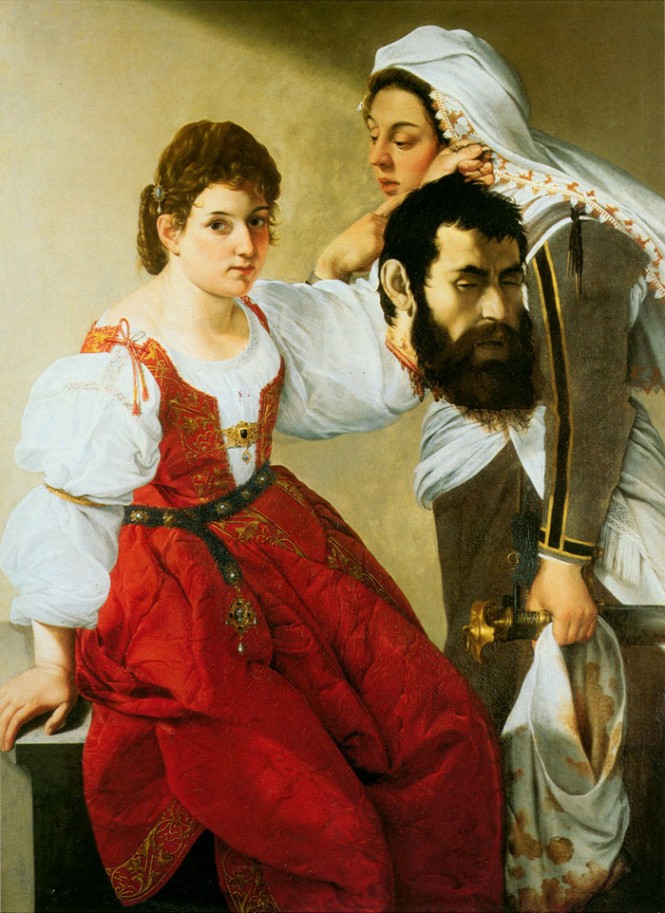
Artemisia Gentileschi, "Judith and Her Maid", 1611-1614, oil on canvas, Collezione Lemme, Rome

Cristofano Allori, "Judith with Holofernes' Head", 1613, oil on canvas, Royal Collection Trust, London

Giovan Francesco Guerrieri, "Judith and Holofernes", 1615-1618, oil on canvas, Banca Popolare dell'Adriatico, Pesaro

Carlo Saraceni, "Judith with Holofernes' Head", c. 1618, oil on canvas, Fondazione di Studi di Storia dell'Arte Roberto Longhi, Florence

Lionello Spada, "Judith with Holofernes Head", 1618-1619, oil on canvas, Galleria Nazionale, Parma

Artemisia Gentileschi, "Judith and Her Maid", 1618-1619, oil on canvas, Galleria Palatina di Palazzo Pitti, Florence

Artemisia Gentileschi, "Judith and Her Maid", detail

Artemisia Gentileschi, ''Judith Decapitating Holofernes'', c. 1620, oil on canvas, Museo nazionale di Capodimonte, Naples
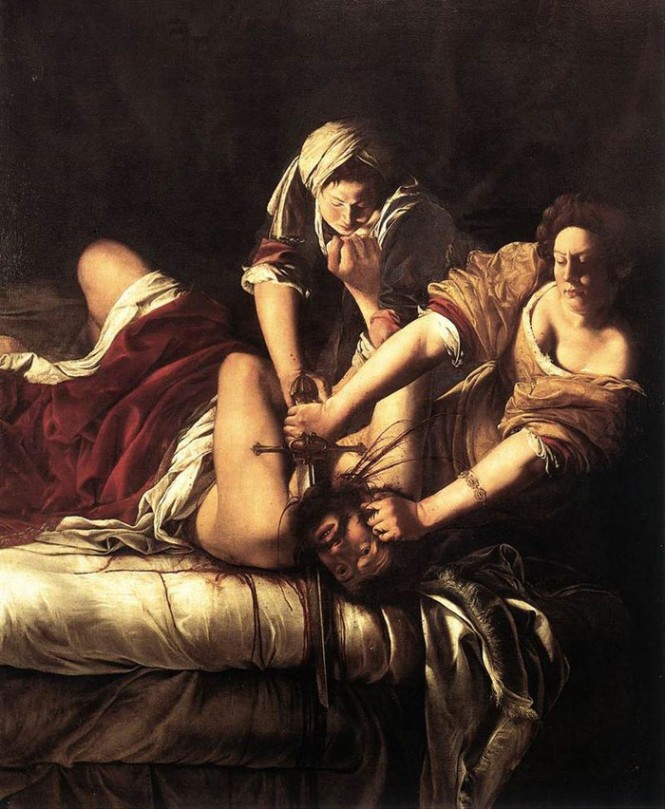
Artemisia Gentileschi, ''Judith and Holofernes'', 1612-1620, oil on canvas, Galleria degli Uffizi, Florence

Artemisia Gentileschi, ''Judith and Her Maid'', 1625-1627, oil on canvas, Detroit Institute of Arts Museum, Detroit
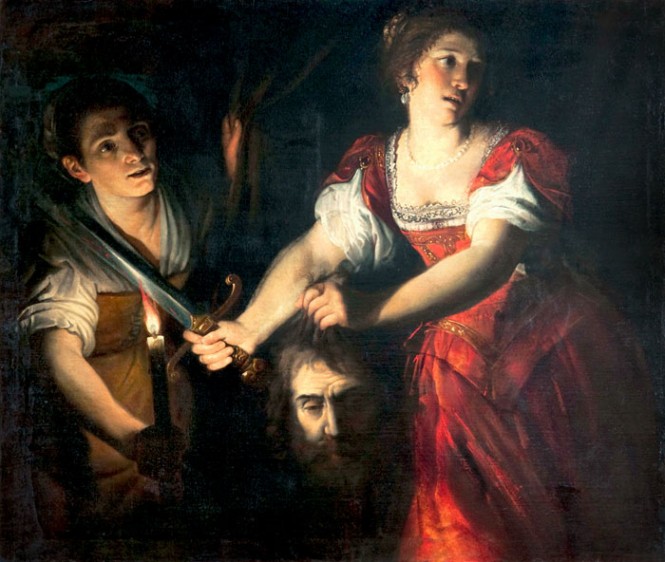
Domenico Fiasella, "Judith with Holofernes' Head", 1626, oil on canvas, Musei Civici di Novara
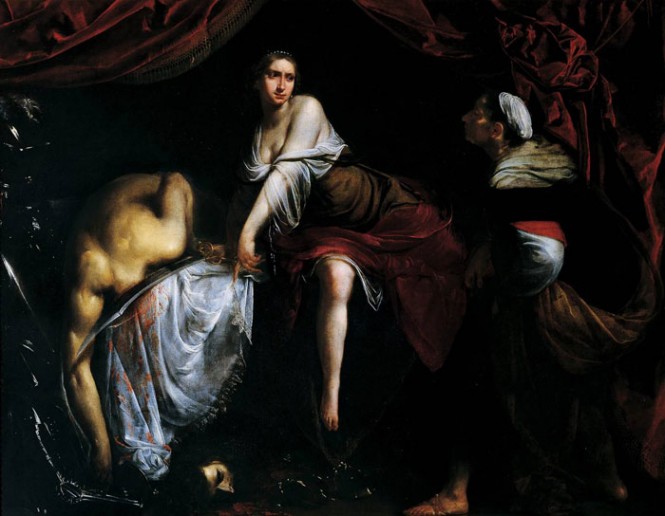
Francesco Furini, "Judith and Holofernes", 1636, oil on canvas, Galleria nazionale d'Arte antica, Rome

Guido Cagnacci, "Judith with Holofernes' Head", c. 1645, oil on canvas, Pinacoteca Nazionale, Bologna

Francesco Montelatici, Cecco Bravo, "Judith with Holofernes' Head", c. 1646, oil on canvas, Museo Stefano Bardini, Florence
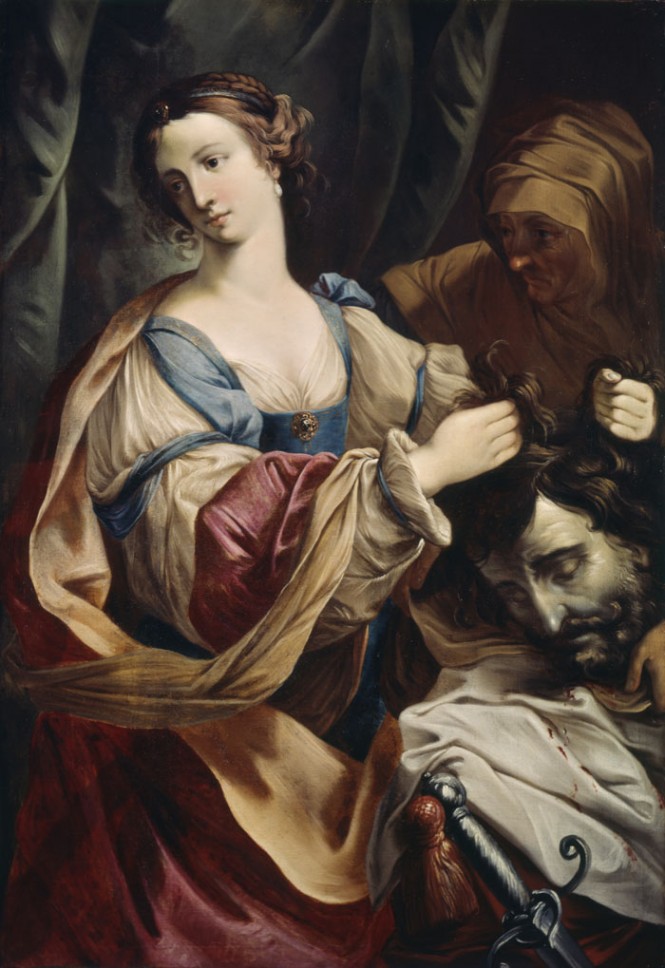
Elisabetta Sirani, "Judith with Holofernes' Head", 17th century, oil on canvas, Walters Art Museum, Baltimore

Lionello Spada, "Judith Gives Holofernes' Head to Her Maid", 17th century, oil on canvas, Pinacoteca Nazionale, Bologna

Bernardo Cavallino, "Judith with Holofernes' Head", 17th century, oil on canvas, Nationalmuseum, Stockholm